Programs

Mental health matters

Statistics held by World Health Organization (WHO) states that more than 720,000 people die by suicide globally every year. This equates to roughly one death by suicide, every 40 seconds.

Whilst one statistic shows that globally, over 1 billion people live with a mental disorder, another variably estimates between 20% and 25% or 40 to 50 million Nigerians suffer from a mental health condition. It is important to bear in mind that these figures may not actually reflect accurately, given the stigmatisation on the subject and limited access to mental healthcare services.

These figures are the foundation's existing citations. They are not a new clinical claim by this website. Consult the World Health Organization for current data.

Our campaigns are designed to encapsulate and educate the multiple age groups of our society through workshops, public forums and publications. This education is necessitated in order to empower individuals to confront, address and transform difficult experiences into positive places of strength.

The workplace is a space where individuals' mental health decline is often undetected because of its insidiously silent nature. Offices are spaces that are designed to maximally construct, advance and exceed business targets but not the mental wellbeing of the very people responsible for the functioning of these businesses.

As it has been proven that mental health illness often unconsciously slips into the hole of neglect, AZU-ERI Mental Health Advocacy Foundation has dedicated itself to innately luminate on the issue. Through advocacy, it implores organizations to participate and partner in spreading awareness for a change of attitude towards the subject.

Our comprehensive programs

We offer a range of programs designed to address mental health challenges and promote overall wellbeing.

Mental Health Awareness Campaigns

Public awareness campaigns to educate communities about mental health issues and reduce stigma.

What to expect

1. Learn to recognize signs of mental health issues.
2. Access to free educational resources and materials.

Target: general public, schools, workplaces

Click here if interested

Workshops & Community Outreach

Interactive workshops on stress management, emotional intelligence, and resilience building.

What to expect

1. Hands-on stress management techniques.
2. Practical emotional intelligence skills.
Personal resilience action plans.

Target: youth, students, parents, teachers

Click here if interested

Counseling & Advocacy

Professional counseling services and advocacy initiatives for mental health rights.

What to expect

1. One-on-one professional counseling sessions.
2. Mental health rights advocacy training.
Family and caregiver support programs.

Target: individuals, families, caregivers

Counseling described here is the foundation's published programme language. Confirm current availability with the team before expecting a clinical appointment.

Click here if interested

Further programmes

Interest in these programmes is registered through the existing registration page. Dates are published only when the foundation has confirmed them.

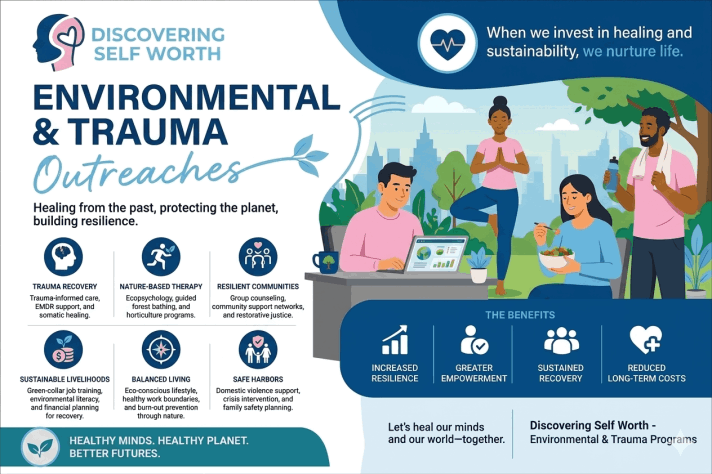
Illustration used for environmental and trauma programmes

Environmental & Trauma Programs

Trauma-informed programs addressing environmental factors affecting mental health.

What to expect

1. Trauma healing and recovery workshops.
2. Safe space for sharing experiences for environmental stressors.

Target: trauma survivors, at-risk populations

Click here if interested
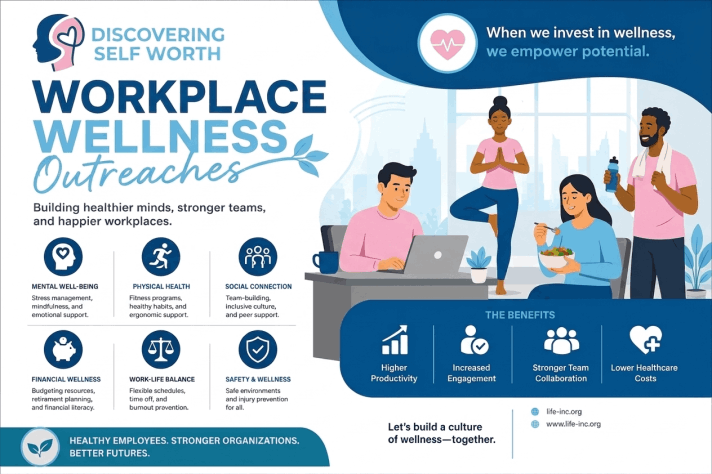
Illustration used for workplace wellness

Workplace Wellness

Corporate wellness programs promoting mental health in the workplace.

What to expect

1. Work-life balance strategies and tools.
Manager and HR training programs.
2. Employee assistance program resources.

Target: employees, HR professionals, managers

Click here if interested
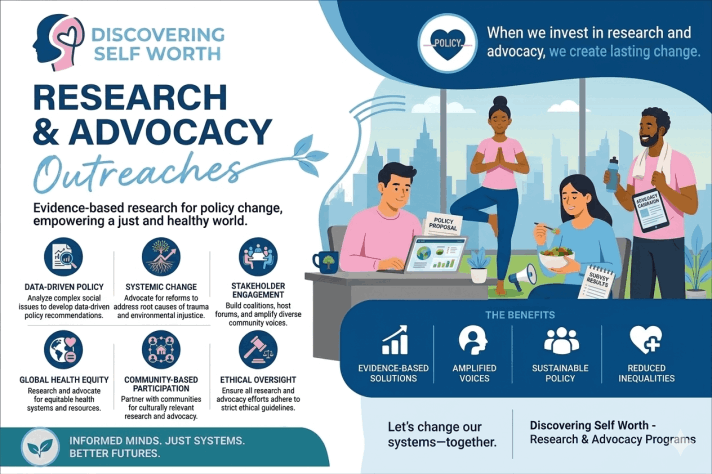
Illustration used for research and advocacy

Research & Advocacy

Research initiatives and policy advocacy for mental health awareness.

What to expect

1. Participate in mental health research studies.
2. Policy advocacy training and workshops.
3. Network with researchers and policymakers.

Target: researchers, policymakers, advocates

Click here if interested